
It's getting harder to incorporate tech into my classroom
And I blame the cloud.

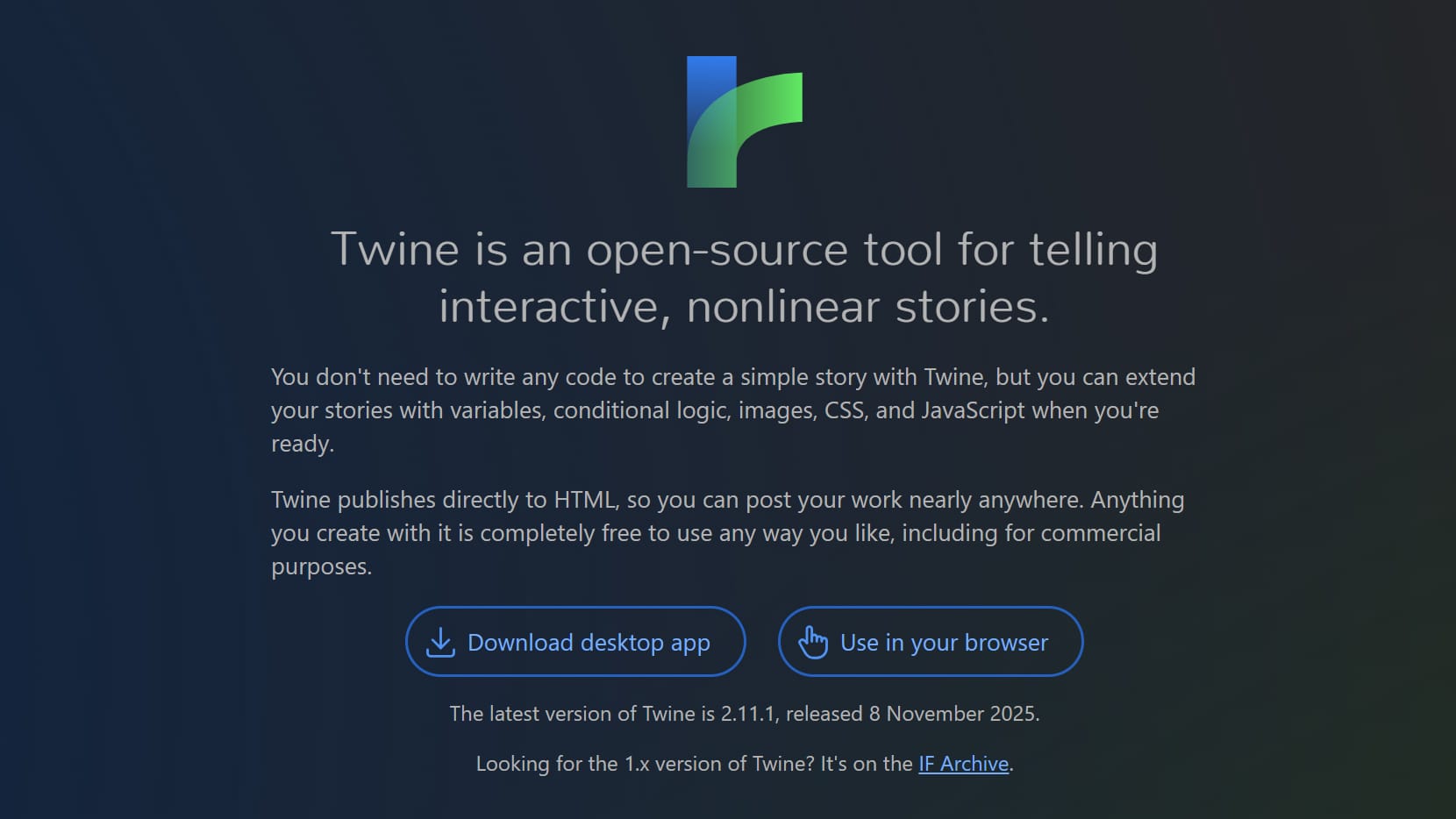
Yesterday, I finished another semester teaching interactive fiction. I've been teaching the "same" course for the last eight years, but it's never exactly the same. I have to adapt it to every class (around 20 students between 9th and 12th grade) and still make sure my assignments align with my state's curriculum standards, but deliver my lessons in a way that accounts for a wide spectrum of computer knowledge. I also have to ensure the software I use is compatible with Chromebooks, MacBooks, and Windows laptops, and free to use. Given those tight and very specific parameters, there is only one program that I can use for what I teach: Twine.
Teaching them how write interactive fiction with Twine isn't the issue. Once my students get past the initial shock of learning how to use variables, conditional statements, and arrays in creative ways, they seem to enjoy using it. They become immersed in their work. They are focused. They ask each other for help. They raise their hands and shout "I got it to work!" They share their work with each other, unprompted. They may forget how to create a hyperlink to another passage, but their brains are always buzzing with ideas about how to incorporate more interactivity into their branching narratives.
But Twine doesn't "live" in the cloud, and the thing that gets harder to teach them every year is how to work outside of a cloud-based system.
Every year, I have to dedicate more instruction time to teaching them how to manually save, download, and import their Twine files. I have to explain why they can't automatically access their files from another computer, and why Twine will automatically save their work on a MacBook or Windows laptop but not a Chromebook. Some are unaware of the difference between something being saved in the cloud verses locally on their computer (or in "the ground," as I like to call it.) And you'd might be surprised how many of my students have trouble figuring out how to upload and/or download their Twine files using Google Drive.
I frontload them with verbal and written instructions, but it doesn't always stick right away. They forget as soon as I teach them, or forget where I put the instructions (in Google Classroom, ironically). It's not a reflection on my teaching methodologies nor their capabilities as students. They forget because this is not the way they learned to interact with technology.
This is especially problematic for my students who use the classroom Chromebooks; when they close the lid they are automatically logged out of their Google account. Any browsing data, Twine files included, is erased. Our school has it set up this way because the students don't have assigned Chromebooks, even though there is a rolling cart of them in every classroom. They're "grab and go" devices.
This past semester, I tried a different approach. I gave all of them a USB stick, which about half of my class had never used before (based on the number of hands that were raised when I asked them.) I stressed that any student using a classroom Chromebook needed to save their Twine files to their USB stick, and to treat their USB stick the same way they would treat their smartphone. (Don't lose it.) I told my students who used MacBooks and Windows laptops to always back up their work to their USB stick, just in case.
They still had to turn in their completed assignments via Classroom, but something marvelous happened. My students had an easier time remembering how to manage their Twine files because there were less steps. To import a file from their Google Drive into Twine, they had to: open the file, then open the file in a new window to access the download button, download it, open Twine, then import the file. But with using a USB stick, those steps became: plug the stick into the computer, open Twine, import the file. The same was true for saving their work.
Would it still be as easy for them if Twine had its own cloud-based file retrieval system? Totally. When I started teaching interactive fiction I used inklewriter as well as Twine. For inklewriter, all my students needed to do was log into their account to access their stories. Zero issues.
But the major problem with it back then was that it sometimes wouldn't save their work if too many people were using it over the same internet connection — like a school's Wi-Fi. Teaching my students how to use two separate programs in a single semester was also a lot. I could have moved to ink, but since the program used markup instead of a programming language (like Twine), my lesson plans would not have been in-line with state curriculum standards.
And without Twine, I might have never noticed that some of my students didn't intuitively understand how to download files from the internet.
There's been a push for STEM education in this country for decades now, and the push for teachers to use tech in the classroom keeps getting harder, rougher. But if the cloud is eroding my students' understanding of a computer's basic capabilities, chances are this isn't an isolated issue — and how will we continue to push STEM education when today's high school students don't naturally interact with computers — with technology — the same way millennials did? How will we do this when our starting point is teaching the difference between the cloud and local storage?
If your response is "It won't matter because everything will be cloud-based," then I urge you to really consider the implications of that.